
EvoAria Evo Era (Ships around the end of October)
Pairs well with
EvoAria Evo Era (Ships around the end of October)
Product details
EvoAria Evo Era
CD, USB and Bluetooth All-in-One DAC and Headphone Amplifier
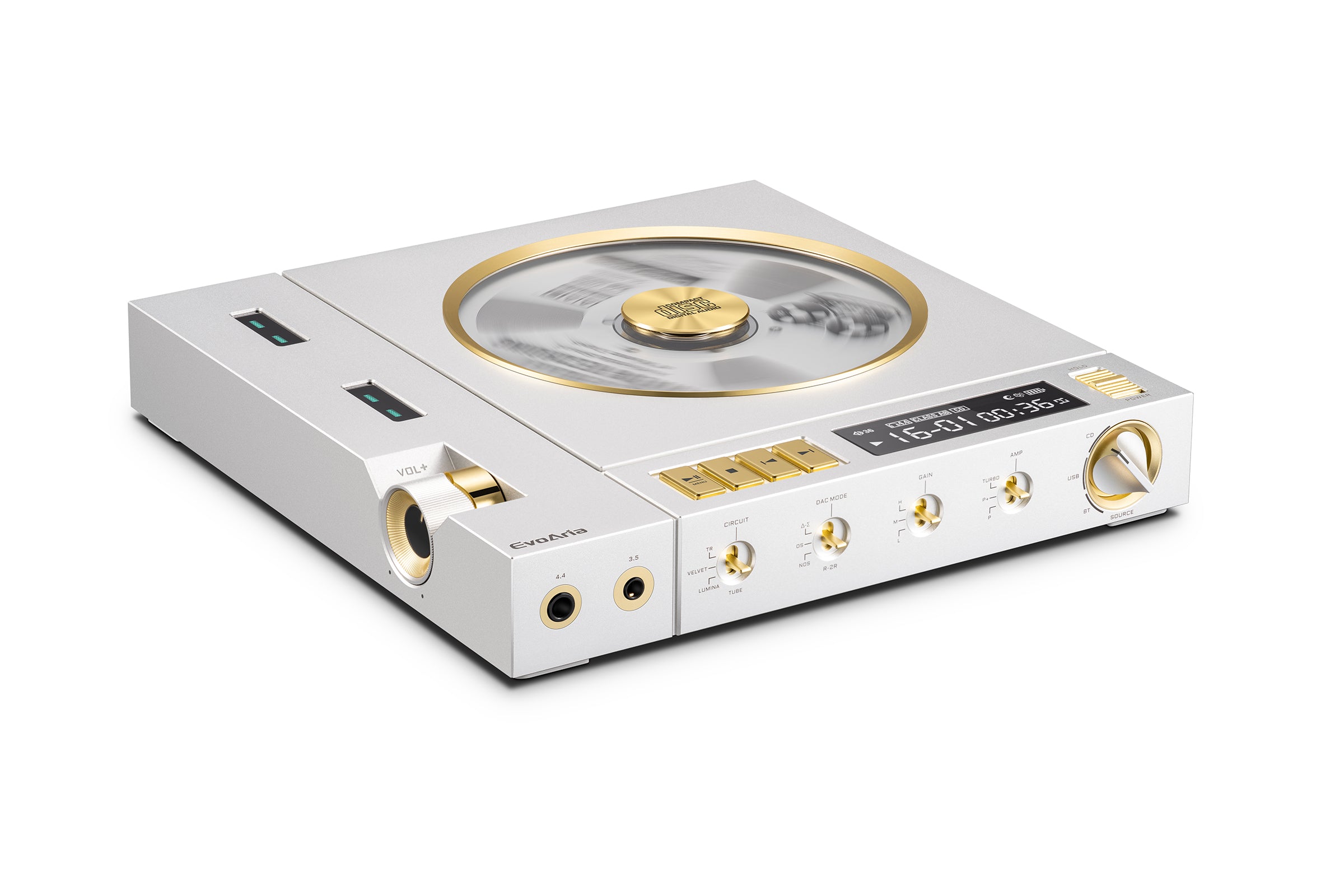
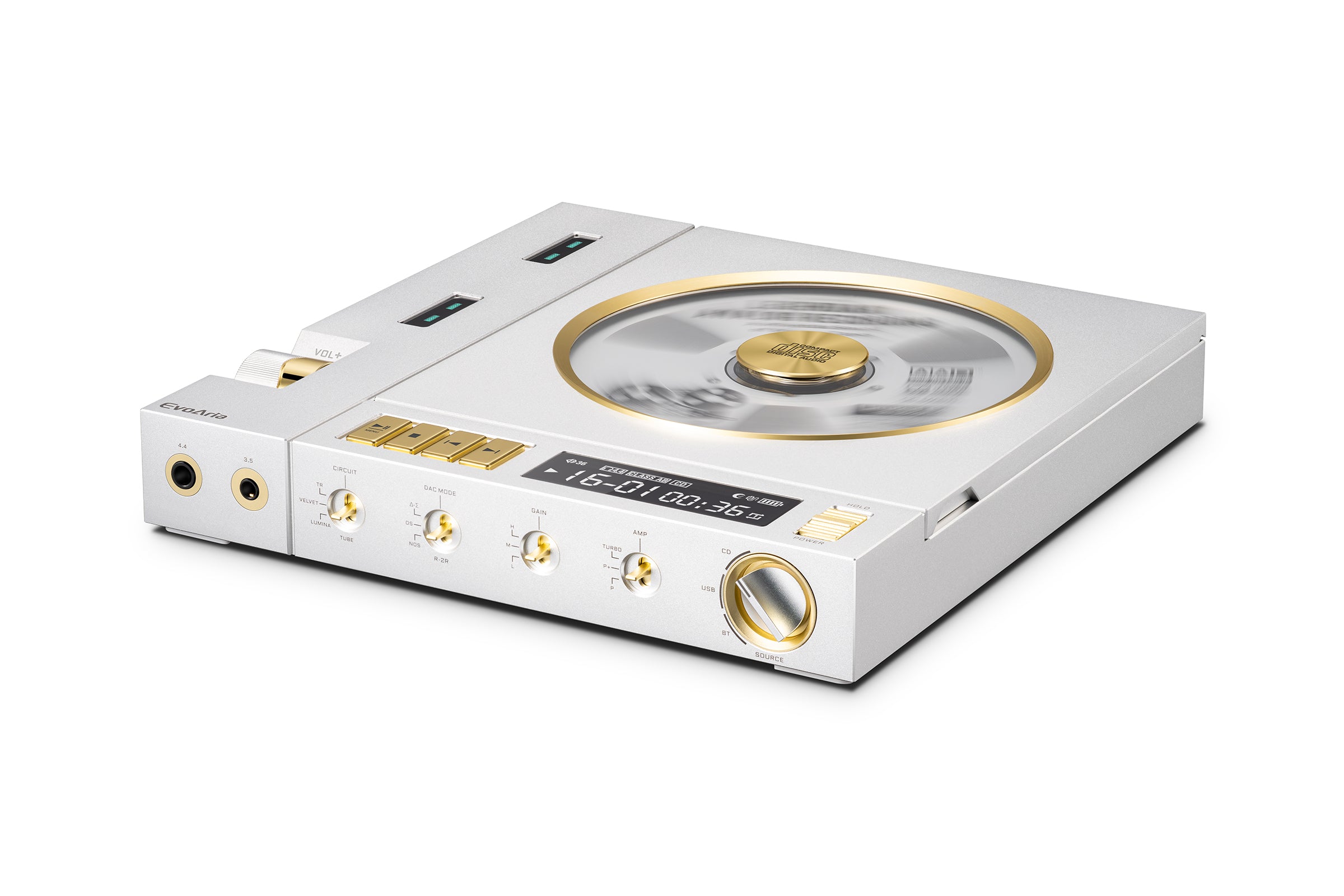
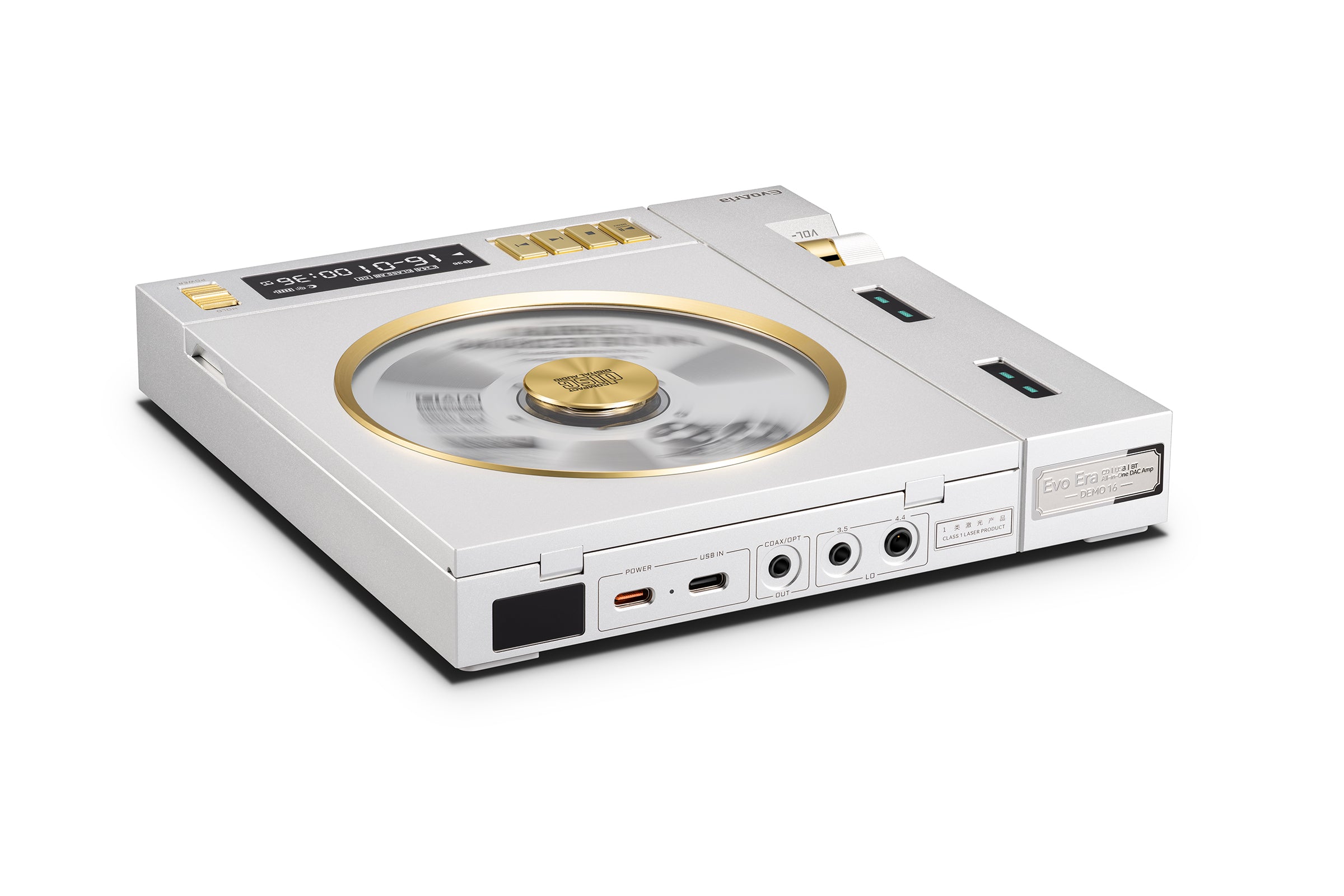
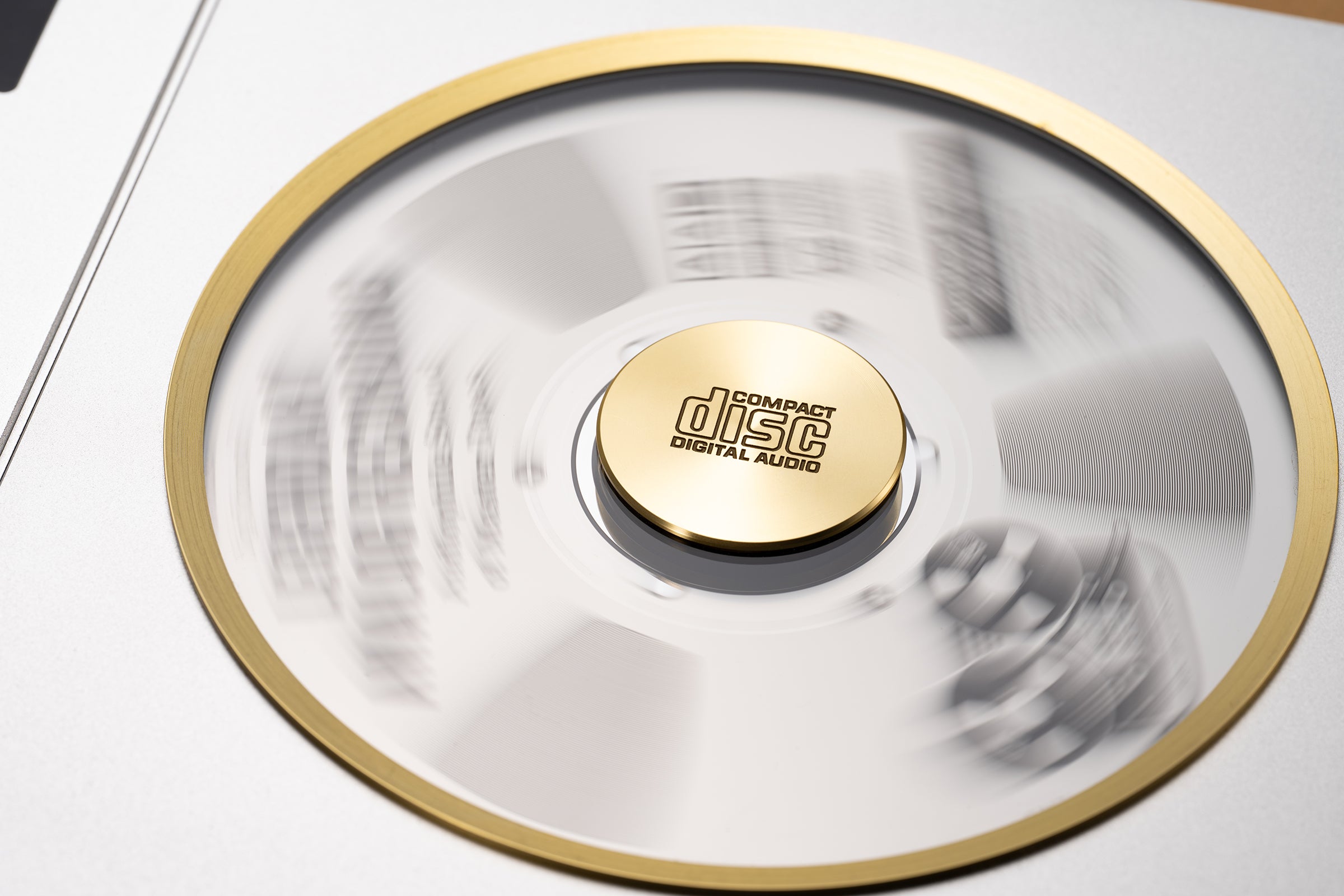
Evo Era puts a CD transport, a high-resolution USB input, a flagship Bluetooth receiver, and a fully configurable headphone amplifier inside one compact aluminum chassis. It is small enough to carry, powerful enough to sit at the center of a desktop setup, and flexible enough to feed an external system when you want the music somewhere else in the room. Two decoding architectures, three analog timbres, and a full set of gain and power options mean the sound is yours to shape rather than something you simply accept.
Three Sources, One Selector
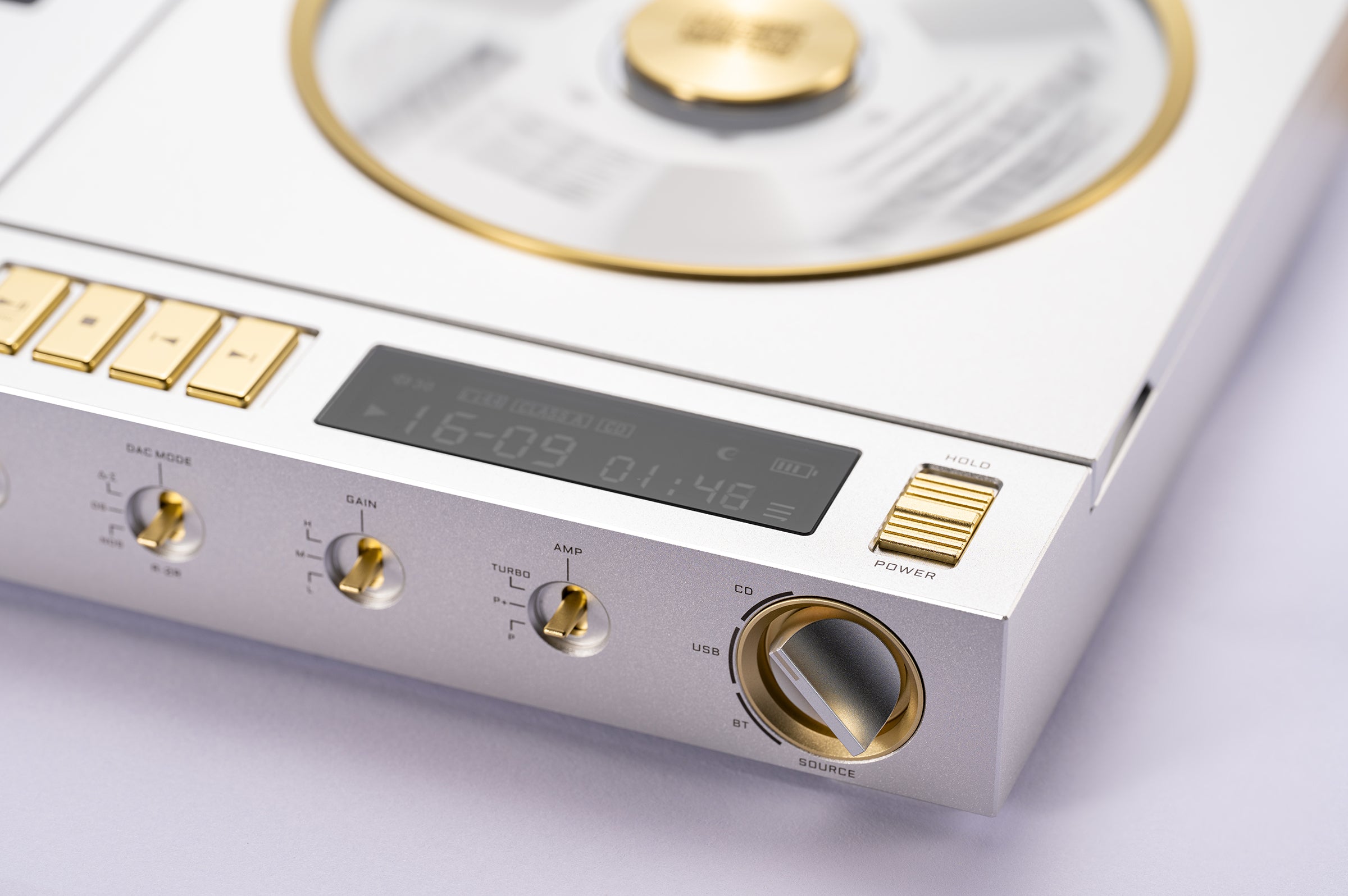
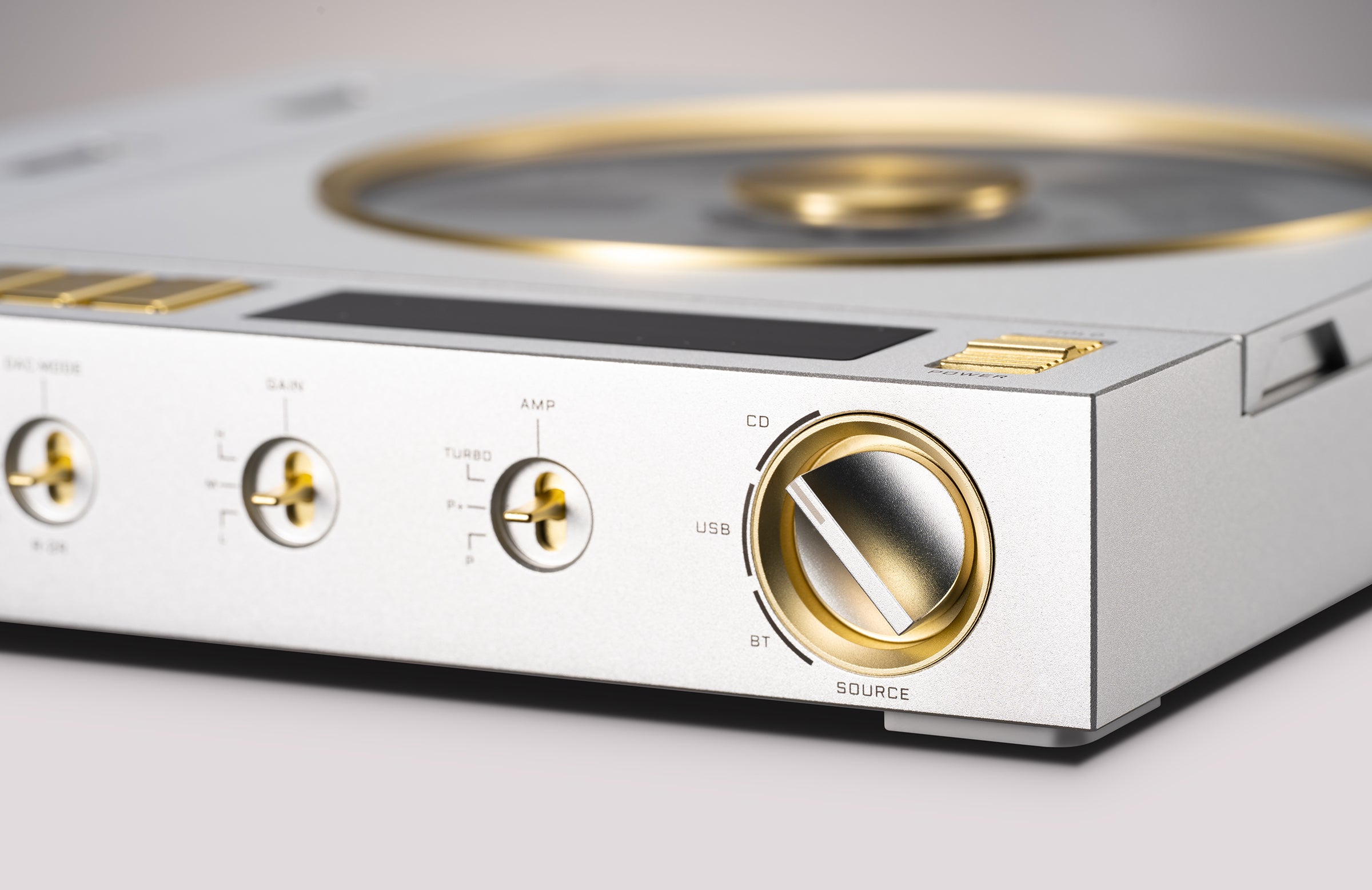
A single SOURCE selector moves Evo Era between CD, USB Audio and Bluetooth. There is no menu diving and no guessing which input is live. Switch the selector and the front display tells you exactly where you are.
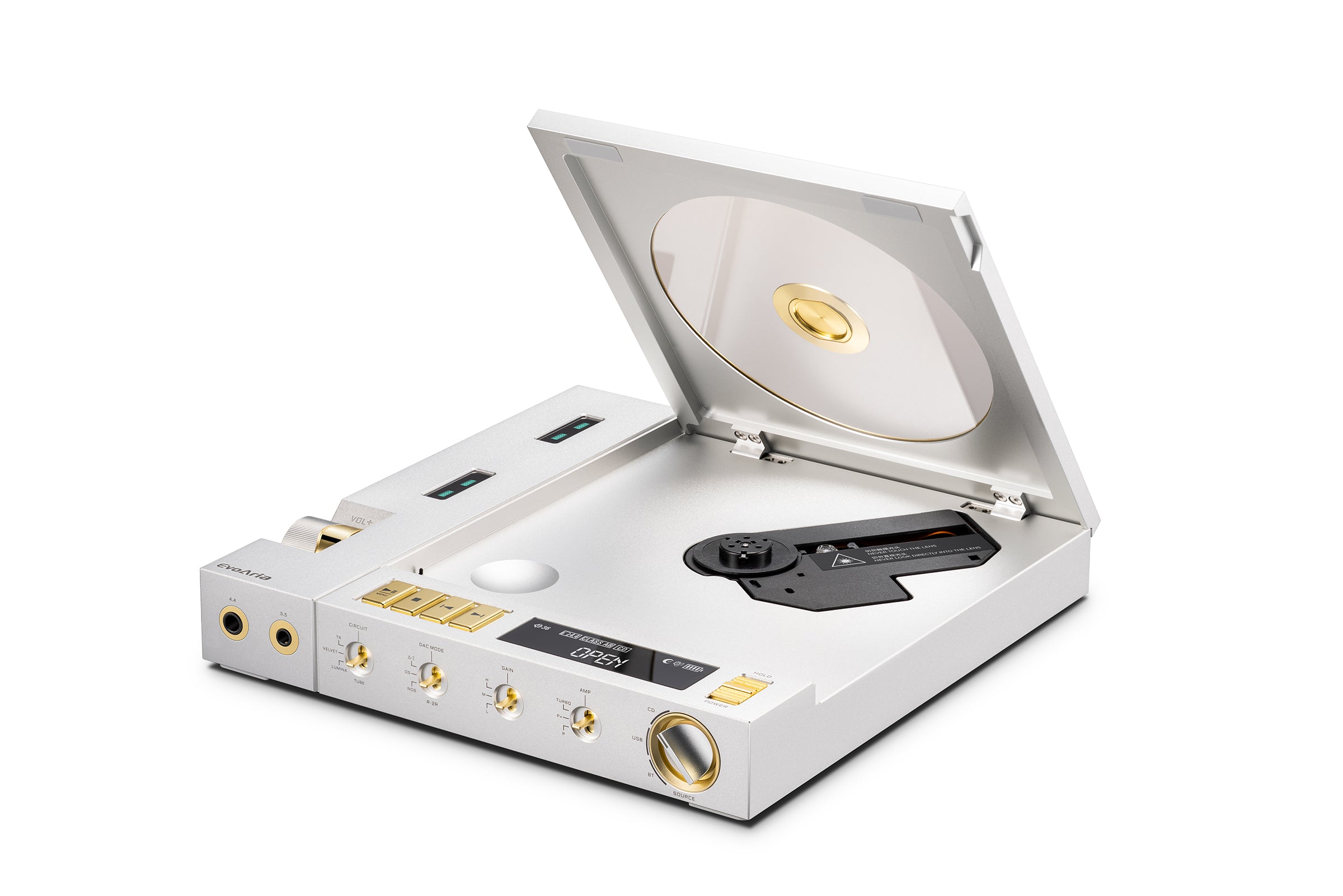
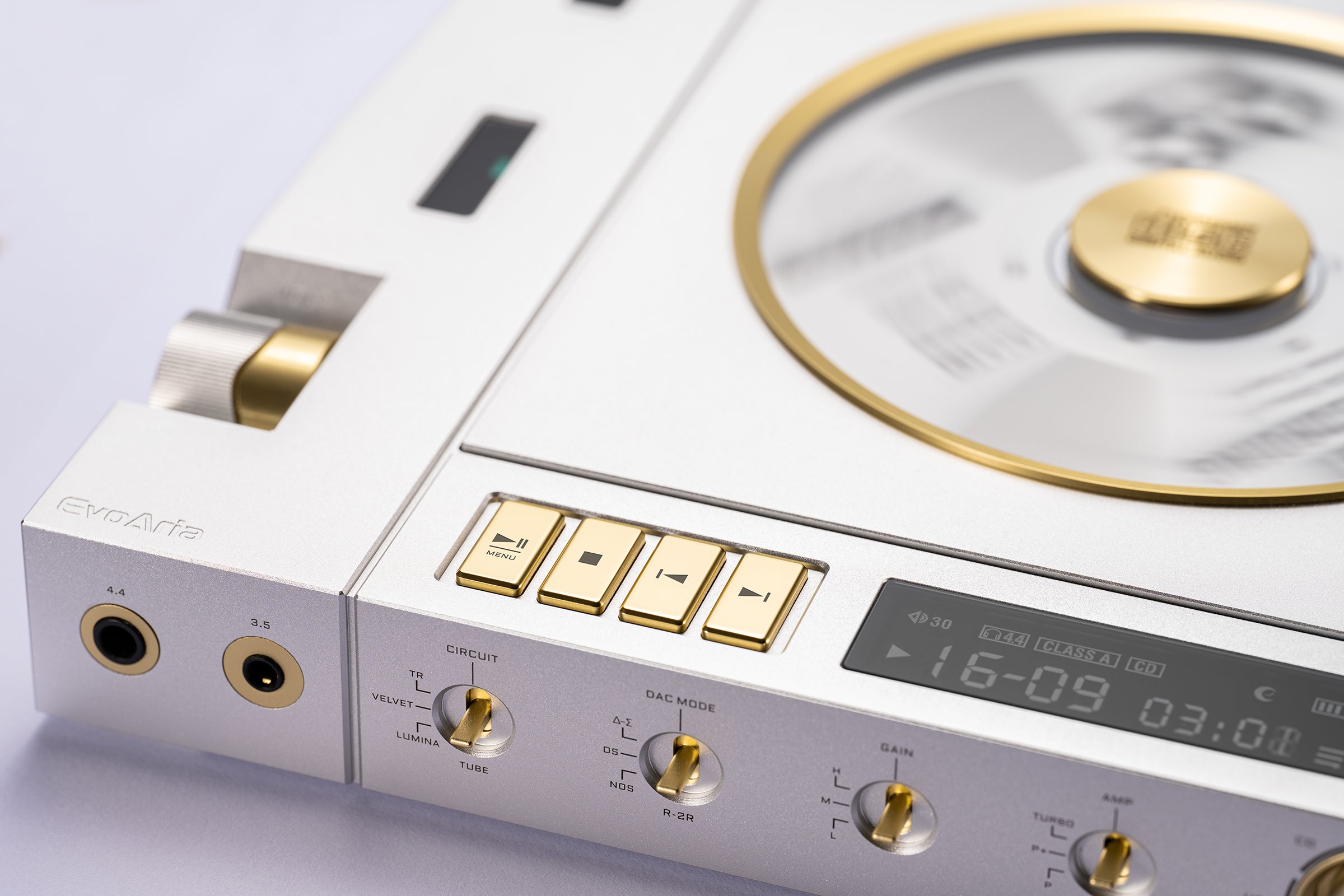
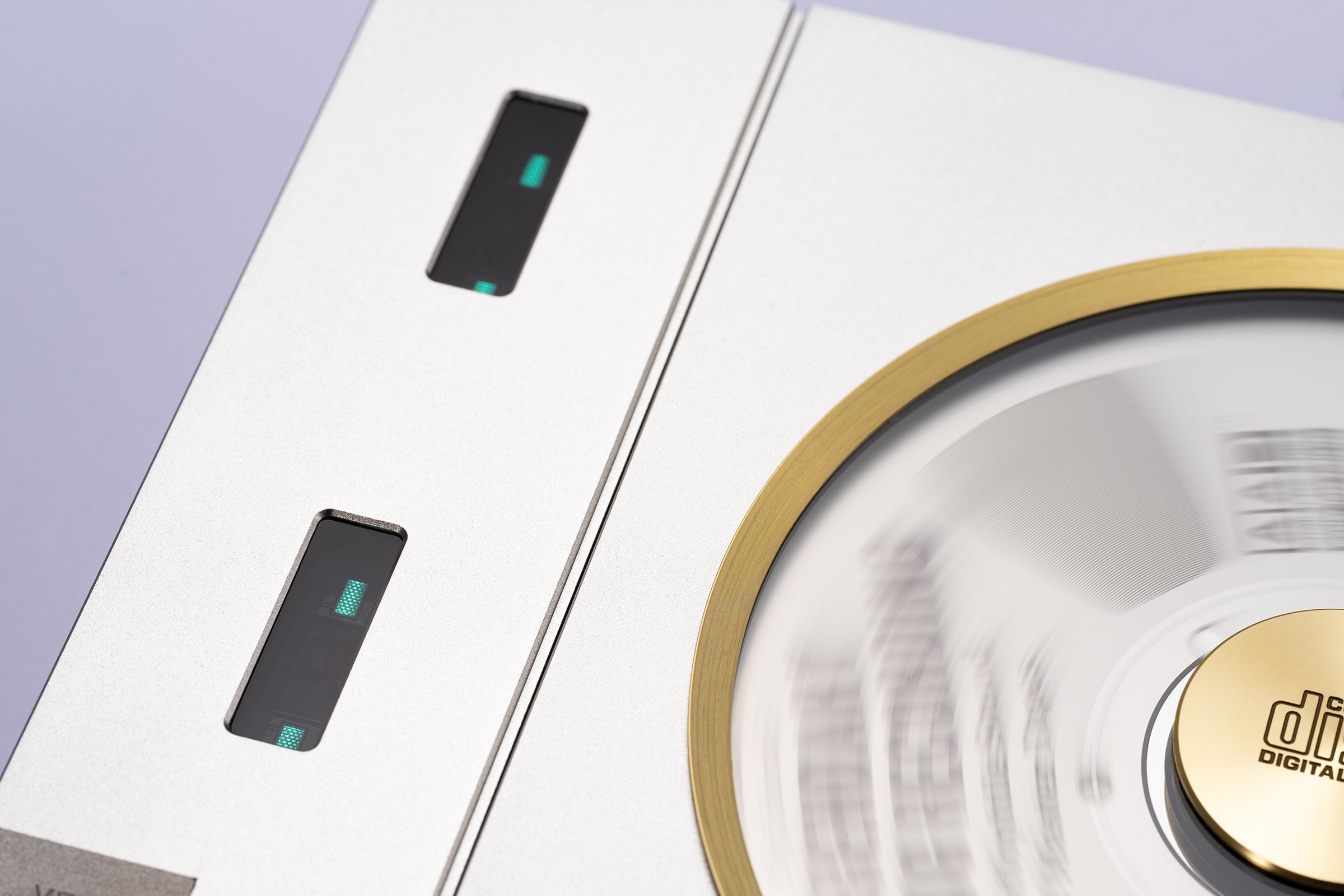
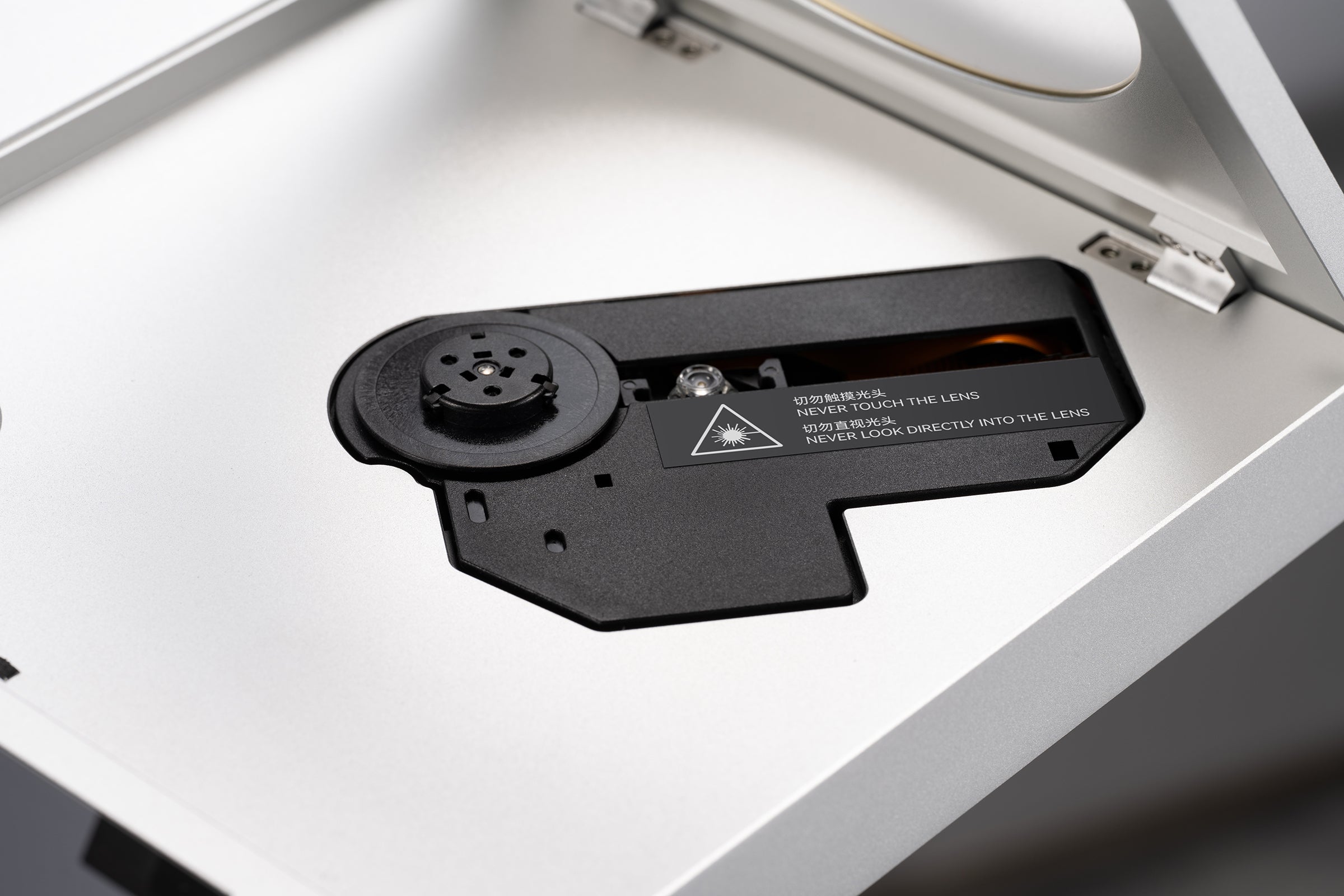
The CD side runs a customized mechanism and servo system with full transport control, including track selection, playback modes, and both individual track time and total time on screen. An XMOS XU316 module handles USB Audio with selectable UAC 1.0 and UAC 2.0 operation, supporting PCM up to 768 kHz and DSD up to DSD512. Bluetooth 5.4 arrives by way of the Qualcomm QCC5181 flagship audio platform with Snapdragon Sound, covering aptX Adaptive, aptX Lossless, aptX HD, aptX, LDAC, AAC, and SBC.
Two Decoding Architectures, Three Ways to Listen
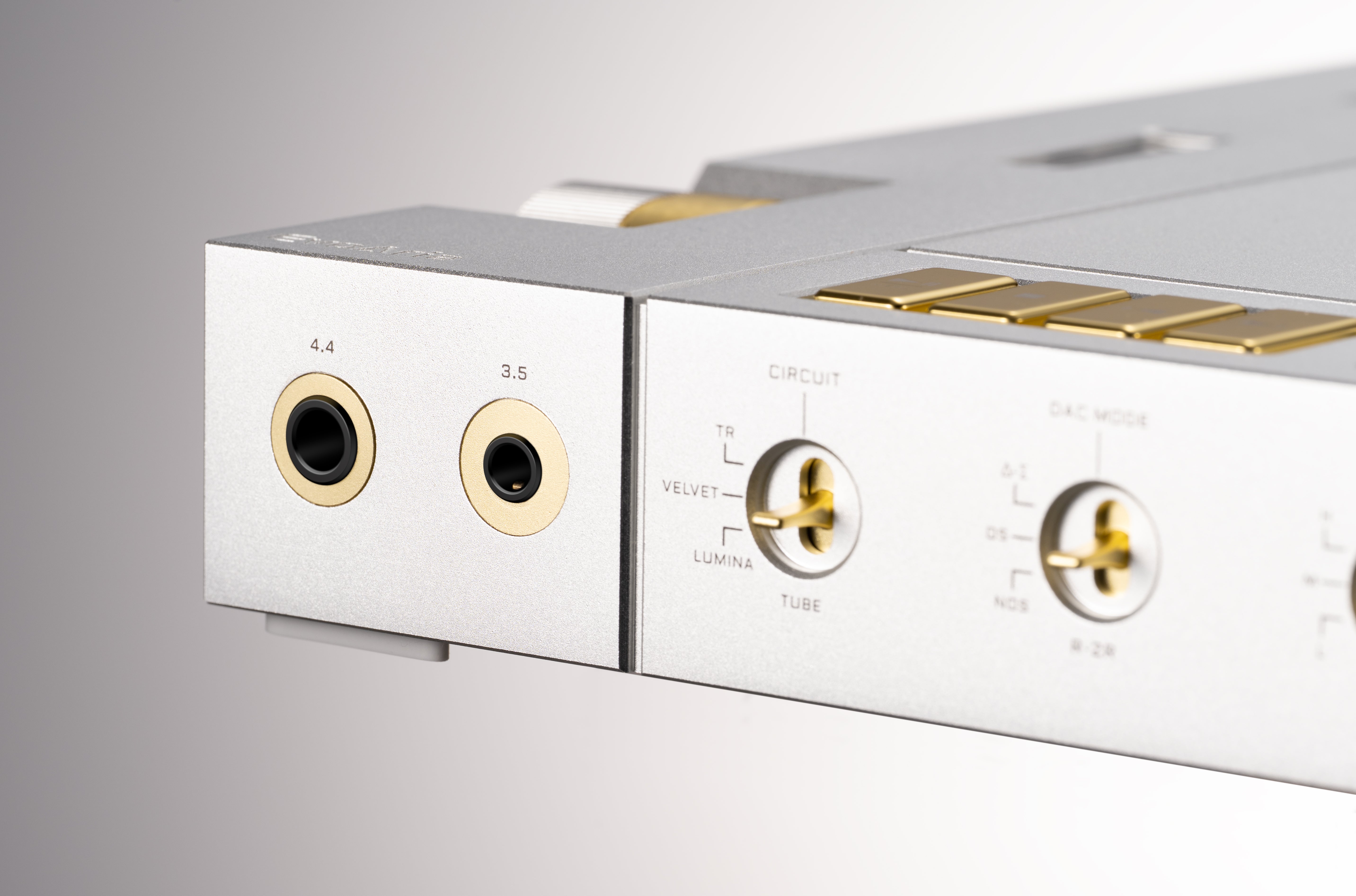
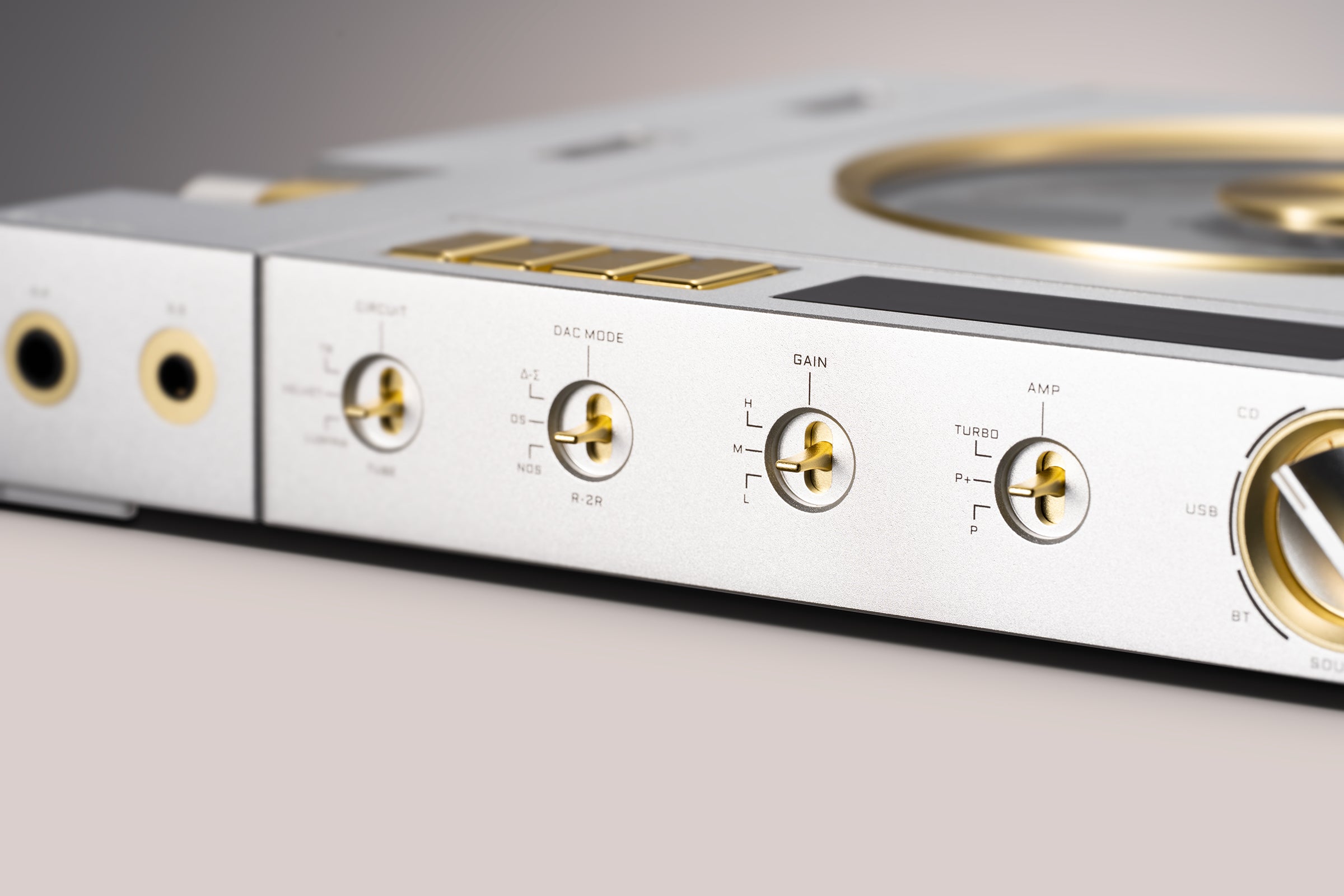
Evo Era carries both a String R-2R decoder and a delta-sigma decoder, and lets you choose between them. The String R-2R section is built from more than 170 high-precision, low-temperature-coefficient resistors across multiple specifications, arranged as a true dual-channel decoder with fully independent power supplies for the left and right channels. The delta-sigma section uses two ES9069Q DAC chips running in MONO mode for fully differential decoding and maximum channel separation.
That gives you three selectable decoding modes: dual ES9069Q delta-sigma, R-2R with oversampling, and R-2R without oversampling. The same album can be smooth and effortless, or raw and immediate, depending on which architecture you hand it to. A high-capacity 100K-LUT FPGA manages I2S signal processing and handles precision calibration of the R-2R section, which is the part that keeps a resistor ladder honest over time.
Analog Timbre and Amplification
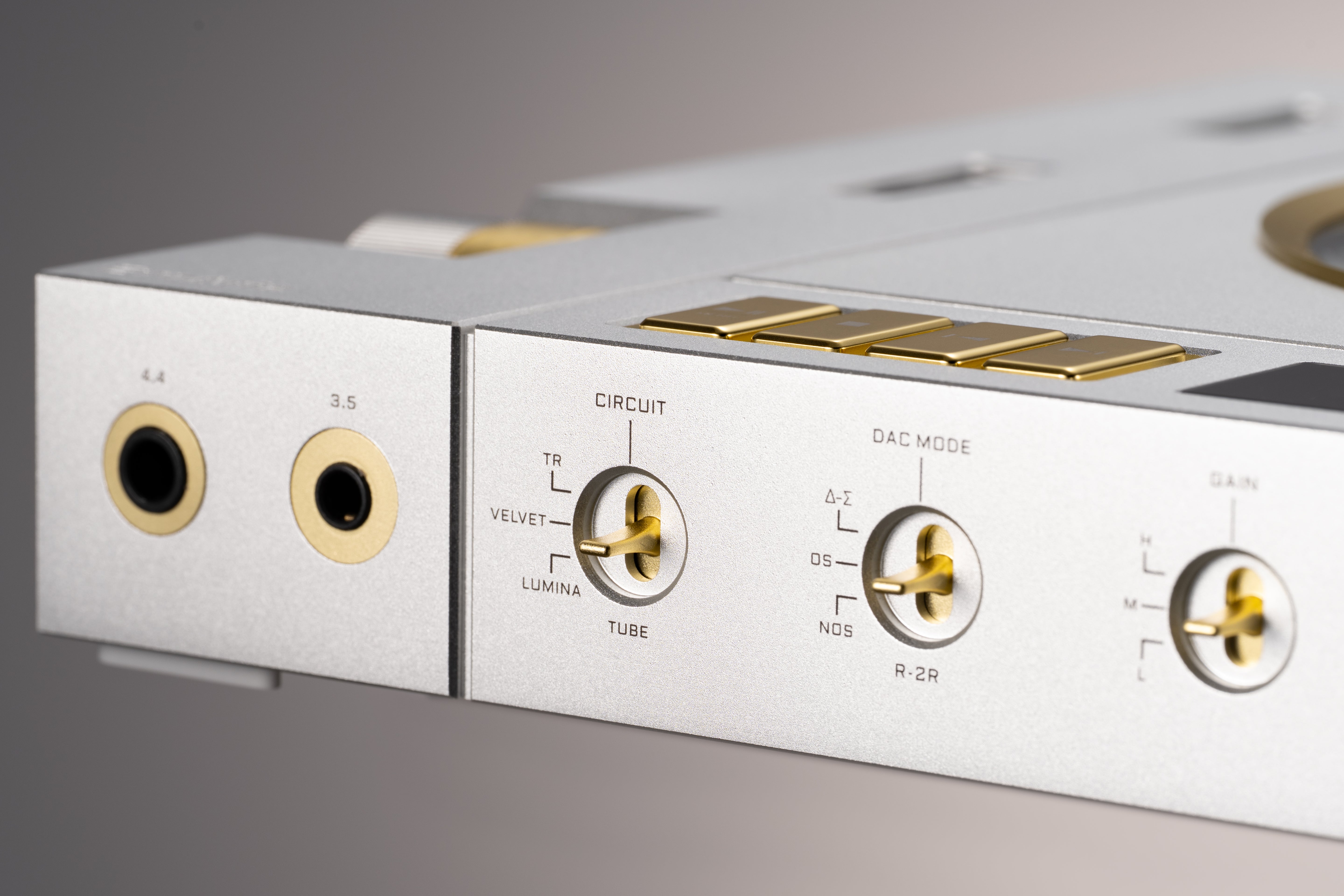
Three analog timbre modes are carried over directly from Evo One, built around a pair of Nutube 6P1 vacuum tubes. TR is a fully transistor-based path, clean and fast with excellent grip. VELVET is a hybrid tube mode with a warmer presentation and a richer midrange, and it suits vocals and small ensembles beautifully. LUMINA is also hybrid, but tuned for transparency, clarity, and a more articulate presentation across a wider range of material.
On top of the timbre choice sit three hardware gain settings (H, M and L), three power levels (TURBO, P+ and P), and switchable CLASS A or CLASS AB operation. It accounts for sensitive IEMs and demanding full-size headphones, and the combinations give you real room to tune the amplifier to the load and your own taste.
Volume Control That Feels Analog and Behaves Digitally
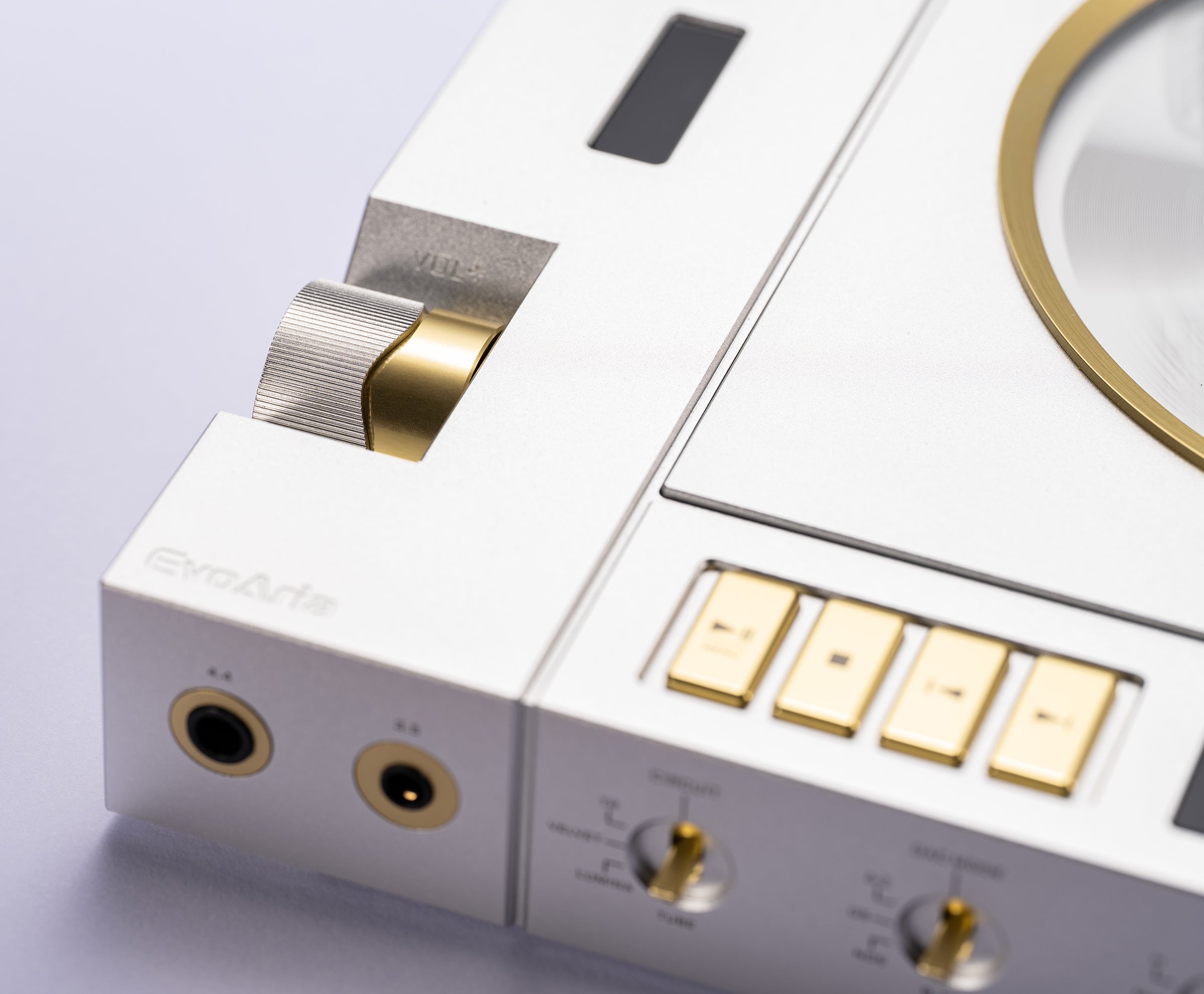
Evo Era pairs an ALPS potentiometer with an NJW1195A volume control IC. You get the tactile feel of a traditional analog knob, while an internal ADC reads its position and drives the NJW1195A electronically. The result is precise, repeatable volume adjustment with minimal channel imbalance at very low listening levels, which is exactly where most analog potentiometers start to fall apart.
CD Ripping to USB
With CD selected and a compatible USB drive connected, Evo Era rips discs directly to the drive as lossless WAV files. Audio is read straight from the CD transport, and you can keep listening while the rip runs. Your physical collection moves to a file library, with no computer anywhere in the chain.
Outputs
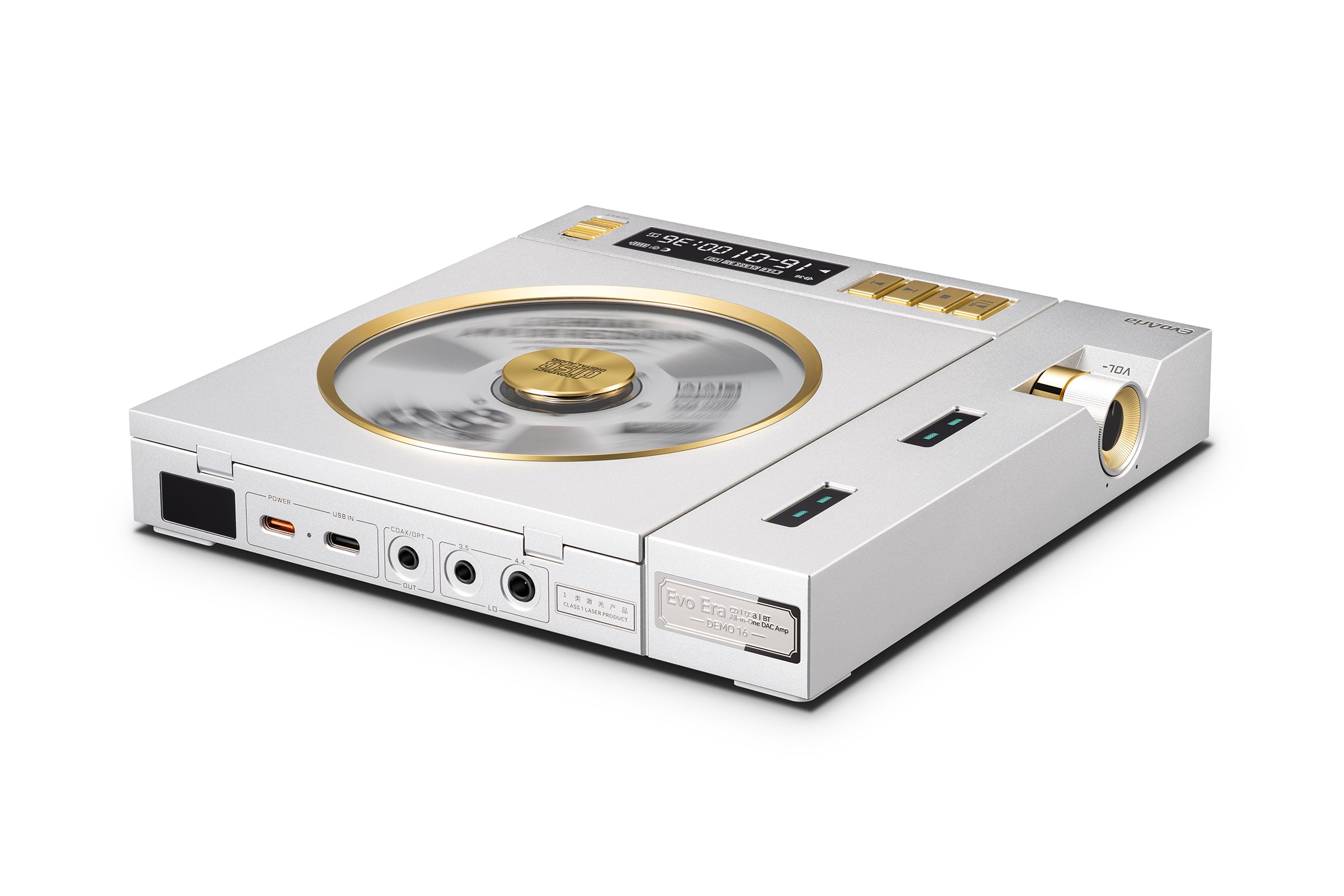
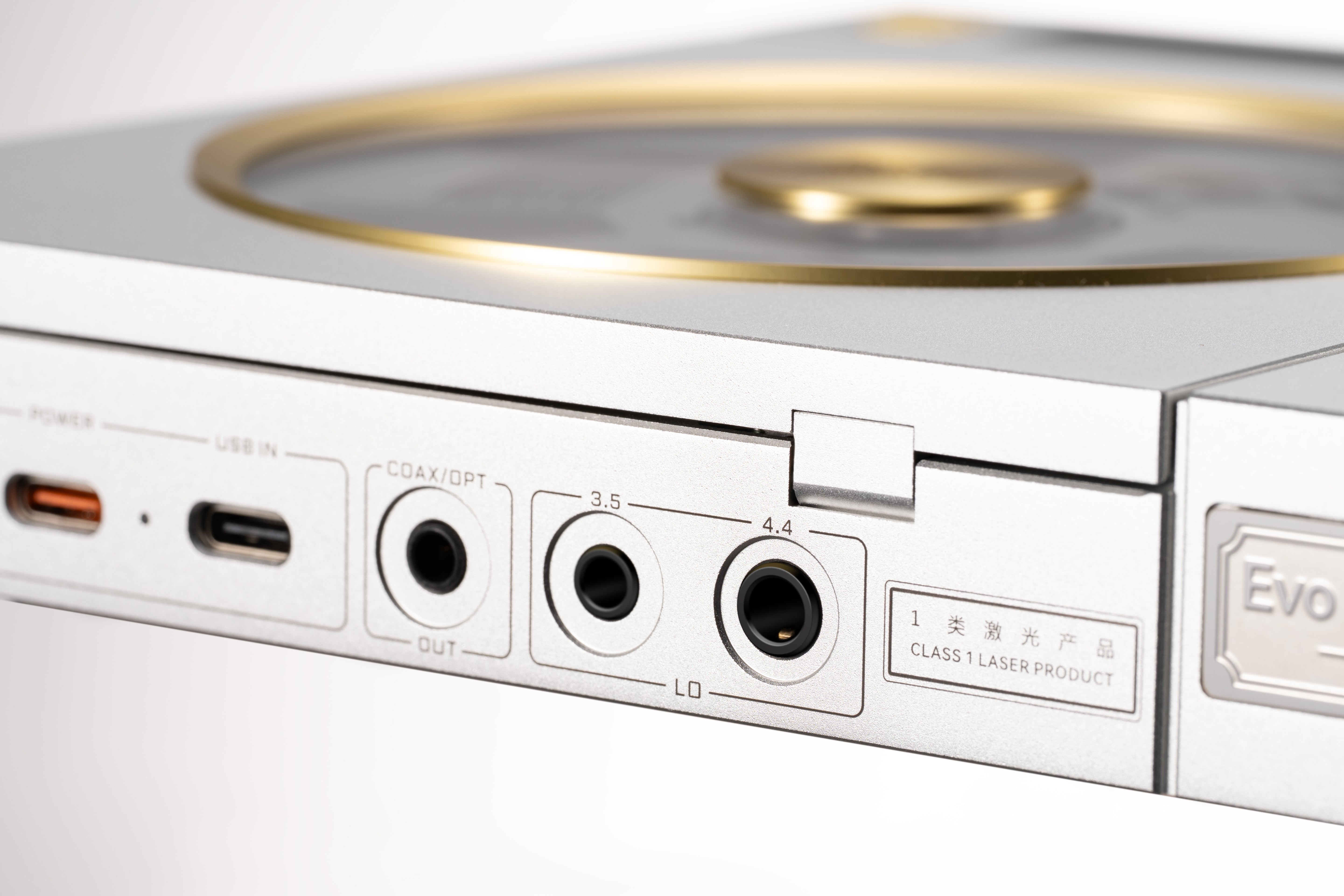
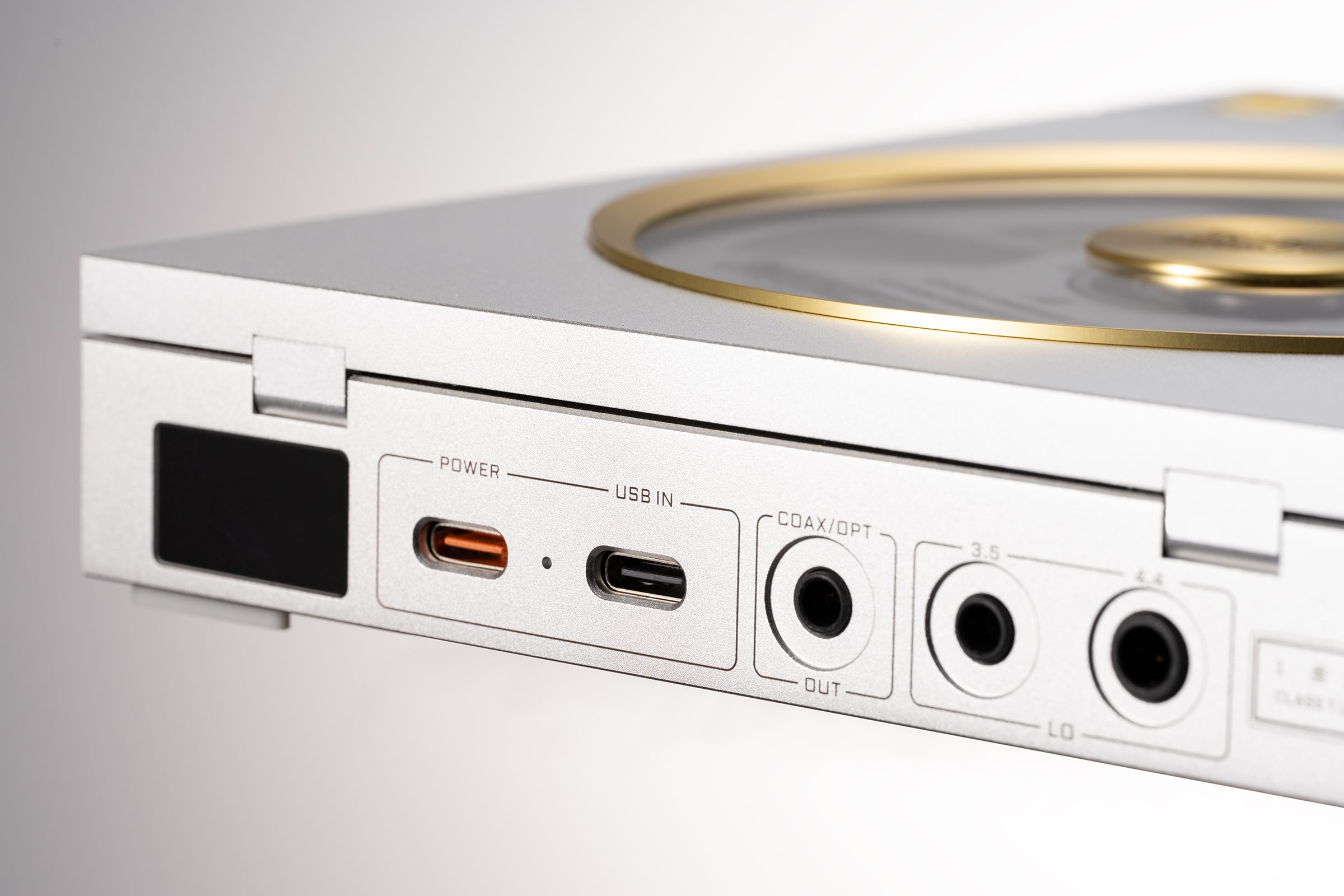
Headphone outputs are provided on 3.5 mm and 4.4 mm, with matching 3.5 mm and 4.4 mm line outputs for connecting to an external system. Digital output is available over coaxial or optical S/PDIF with automatic output detection, supporting PCM up to 192 kHz and DSD64.
The analog outputs use intelligent connection detection. Headphone output takes priority over line output, and when multiple connections are detected simultaneously, the most recently connected output takes precedence. Plug-and-play, without reaching for a menu.
Power and Battery
A 3.87 V, 10,000 mAh battery lets Evo Era run entirely off the grid. Expect roughly 9 hours in CD mode with the 4.4 mm output in hybrid timbre, and up to around 14 hours in CD mode with the 3.5 mm output in TR mode. Charging is handled over USB PD at 9 V and 2 A, taking approximately three and a half hours, or approximately five hours with a standard 5 V, 2 A supply.
Connect a PD-compliant adapter, then select DC INPUT mode from the menu. The adapter then powers Evo Era directly while simultaneously charging the battery, and DC TURBO mode engages automatically for maximum output. The menu also offers idle auto power off, and detection circuits at the analog outputs shut down unused analog sections based on what is actually connected, so battery life is not spent on stages you are not listening to. Standby draw with the display off is approximately 290 mA for more than 30 hours of standby time, and powered-off draw is approximately 40 μA.
Build and Finish
The chassis is machined from 6063 aluminum, anodized, and given a No. 200 glass bead micro-sandblasted surface treatment, finished in silver, white, and gold. Function markings are deep-engraved and laser-etched rather than printed. Every unit carries a dedicated stainless steel plate on the rear panel with its own serial number.
Evo Era measures 182 x 182 x 29 mm, with the height excluding the 2 mm feet and the selector knob, which protrudes a further 4 mm. Net weight is 1,025 g.
Display, Controls and Firmware
A 2.2-inch TFT display carries the source, playback status, volume, menu settings, firmware upgrade progress, and system notifications. Four physical buttons handle playback and menu navigation, while a POWER and HOLD switch manages screen-off, power, and the HOLD lock. MCU firmware can be updated from the menu using a USB drive, following the upgrade instructions supplied with each firmware release.
Specifications
Block Diagram

Key Hardware
|
Model |
EA-D002 |
|
DAC |
2 x ES9069Q, String R-2R (OS and NOS), 100K-LUT FPGA |
|
Main Controller |
ESP32-S3 |
|
CD Servo System |
Custom CD mechanism with custom servo system |
|
USB |
XMOS XU316 |
|
Operational Amplifiers |
8 op-amp chips |
|
Vacuum Tubes |
2 x Nutube 6P1 |
|
Display |
2.2-inch TFT |
|
Bluetooth |
QCC5181, Bluetooth 5.4 |
|
Battery |
3.87 V, 10,000 mAh |
|
Dimensions |
182 x 182 x 29 mm |
|
Net Weight |
1,025 g |
Headphone Output Power (THD+N ≤ 0.5%)
|
Mode |
3.5 mm SE 16Ω |
3.5 mm SE 32Ω |
3.5 mm SE 150Ω |
4.4 mm BAL 16Ω |
4.4 mm BAL 32Ω |
4.4 mm BAL 150Ω |
|---|---|---|---|---|---|---|
|
P |
500 mW |
310 mW |
80 mW |
850 mW |
700 mW |
210 mW |
|
P+ |
600 mW |
380 mW |
98 mW |
1050 mW |
880 mW |
260 mW |
|
Turbo |
710 mW |
465 mW |
117 mW |
1240 mW |
1050 mW |
315 mW |
|
DC IN |
850 mW |
550 mW |
120 mW |
1700 mW |
1500 mW |
460 mW |
DC IN mode requires a PD-compliant power adapter with Power Source set to DC INPUT in the menu.
3.5 mm Single-Ended Headphone Output
|
Parameter |
Transistor |
Tube (Lumina) |
||||
|---|---|---|---|---|---|---|
|
Δ-Σ |
R-2R OS |
R-2R NOS |
Δ-Σ |
R-2R OS |
R-2R NOS |
|
|
Frequency Response (Fs=192 kHz, 32Ω, ±0.5 dB) |
20 Hz to 52 kHz |
20 Hz to 30 kHz |
20 Hz to 27 kHz |
20 Hz to 45 kHz |
20 Hz to 29 kHz |
20 Hz to 26 kHz |
|
THD+N (Out: 0.5 V, 1 kHz, Fs=192 kHz, 32Ω, 20 Hz to 20 kHz, A-Weighted) |
0.0025% |
0.0022% |
0.0025% |
0.25% |
||
|
Dynamic Range (1 kHz, Fs=192 kHz, 32Ω, A-Weighted) |
121 dB |
108 dB |
107 dB |
119 dB |
108 dB |
107 dB |
|
SNR (Fs=192 kHz, 32Ω, A-Weighted) |
121 dB |
118 dB |
119 dB |
117 dB |
||
|
Channel Separation (1 kHz, 32Ω) |
72 dB |
|||||
|
Output Impedance |
0.5Ω |
|||||
4.4 mm Balanced Headphone Output
|
Parameter |
Transistor |
Tube (Lumina) |
||||
|---|---|---|---|---|---|---|
|
Δ-Σ |
R-2R OS |
R-2R NOS |
Δ-Σ |
R-2R OS |
R-2R NOS |
|
|
Frequency Response (Fs=192 kHz, 32Ω, ±0.5 dB) |
20 Hz to 52 kHz |
20 Hz to 30 kHz |
20 Hz to 27 kHz |
20 Hz to 45 kHz |
20 Hz to 29 kHz |
20 Hz to 26 kHz |
|
THD+N (Out: 1 V, 1 kHz, Fs=192 kHz, 32Ω, 20 Hz to 20 kHz, A-Weighted) |
0.0025% |
0.0024% |
0.0028% |
0.25% |
||
|
Dynamic Range (1 kHz, Fs=192 kHz, 32Ω, A-Weighted) |
124 dB |
110 dB |
107 dB |
118 dB |
108 dB |
107 dB |
|
SNR (Fs=192 kHz, 32Ω, A-Weighted) |
125 dB |
113 dB |
118 dB |
113 dB |
||
|
Channel Separation (1 kHz, 32Ω, A-Weighted) |
107 dB |
103 dB |
107 dB |
102 dB |
||
|
Output Impedance |
1Ω |
|||||
3.5 mm Line Output
|
Parameter |
Transistor |
Tube (Lumina) |
||||
|---|---|---|---|---|---|---|
|
Δ-Σ |
R-2R OS |
R-2R NOS |
Δ-Σ |
R-2R OS |
R-2R NOS |
|
|
Output Level (47 kΩ) |
2.1 V |
|||||
|
Frequency Response (Fs=192 kHz, 47 kΩ, ±0.5 dB) |
20 Hz to 60 kHz |
20 Hz to 30 kHz |
20 Hz to 29 kHz |
20 Hz to 50 kHz |
20 Hz to 30 kHz |
20 Hz to 27 kHz |
|
THD+N (1 kHz, Fs=192 kHz, 47 kΩ, A-Weighted) |
0.0022% |
0.0028% |
0.0030% |
0.25% |
||
|
Dynamic Range (1 kHz, Fs=192 kHz, 47 kΩ, A-Weighted) |
121 dB |
107 dB |
120 dB |
107 dB |
||
|
SNR (Fs=192 kHz, 47 kΩ, A-Weighted) |
123 dB |
121 dB |
120 dB |
119 dB |
||
|
Channel Separation (1 kHz, 47 kΩ) |
90 dB |
|||||
|
Output Impedance |
100Ω |
|||||
4.4 mm Line Output
|
Parameter |
Transistor |
Tube (Lumina) |
||||
|---|---|---|---|---|---|---|
|
Δ-Σ |
R-2R OS |
R-2R NOS |
Δ-Σ |
R-2R OS |
R-2R NOS |
|
|
Output Level (47 kΩ) |
4.2 V |
|||||
|
Frequency Response (Fs=192 kHz, 47 kΩ, ±0.5 dB) |
20 Hz to 60 kHz |
20 Hz to 30 kHz |
20 Hz to 29 kHz |
20 Hz to 50 kHz |
20 Hz to 30 kHz |
20 Hz to 27 kHz |
|
THD+N (1 kHz, Fs=192 kHz, 47 kΩ, A-Weighted) |
0.0025% |
0.0023% |
0.0026% |
0.25% |
||
|
Dynamic Range (1 kHz, Fs=192 kHz, 47 kΩ, A-Weighted) |
125 dB |
109 dB |
108 dB |
121 dB |
108 dB |
|
|
SNR (Fs=192 kHz, 47 kΩ, A-Weighted) |
126 dB |
120 dB |
122 dB |
118 dB |
||
|
Channel Separation (1 kHz, 47 kΩ) |
105 dB |
102 dB |
103 dB |
100 dB |
||
|
Output Impedance |
100Ω |
|||||
Measurement conditions: USB audio input, Turbo mode, Gain H, Class A.
Digital Output
Coaxial and optical S/PDIF with automatic output detection. Maximum supported formats are PCM 192 kHz and DSD64.
Power
|
Built-in Battery |
3.87 V, 10,000 mAh |
|
Charging Protocol |
PD fast charging, 9 V / 2 A |
|
Charging Time |
Approx. 3.5 hours with fast charging; approx. 5 hours with standard 5 V / 2 A charging |
|
Battery Life |
Approx. 9 hours minimum in CD mode with 4.4 mm output and hybrid timbre; up to approx. 14 hours in CD mode with 3.5 mm output and TR mode |
|
Standby Current |
Approx. 290 mA with display off |
|
Standby Time |
More than 30 hours |
|
Power-Off Current |
Approx. 40 μA |
If you have any questions, you are always welcome to contact us. We'll get back to you as soon as possible, within 24 hours on weekdays.
-
Shipping Information
Most orders placed before 3:00 PM EST are processed and shipped the same business day. In rare cases, fulfillment may take longer due to stock availability, custom modifications, or special-order items.
Expedited shipping options are available at checkout, including Next Day Air, 2-Day, and 3-Day delivery. Most international orders ship via UPS Worldwide for fast and dependable service.
-
Customer Support
Not sure which product is the best fit?
Send us an email at info@musicteck.com. Tell us what you listen to, what gear you currently own, and what kind of sound you're looking for. We respond quickly and are always happy to provide honest, personalized recommendations.
-
FAQ’s
View our FAQ page here!
-
Contact Us
Questions? We're here to help. For more immediate or urgent questions, give us a call at +1 (917) 576-4365.
Our customer support team is available Monday through Friday, 10:00 AM - 5:00 PM (ET).